
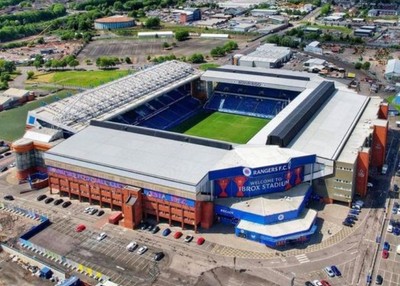
Rangers’ decision today to remove both their CEO and sporting director marks yet another chapter in a turbulent period for the club. While instability has become worryingly familiar at Ibrox, it also presents a rare opportunity: a clean slate, a chance to reset structures, re-establish identity, and rebuild with purpose.
If Rangers are to return to being the dominant football force they expect, and need to be, the next steps must be strategic, not cosmetic. Here are the three essential moves the club should make as they chart the next era.
1. Appoint David Weir as Sporting Director: A Natural Fit With Football Intelligence and Club DNA
If Rangers are looking for stability, credibility, and football intelligence, they need look no further than David Weir.
Weir is not just a respected former captain; he is one of the most quietly effective football operators to emerge from Scotland in the last decade. His work at Brighton & Hove Albion has been transformative. As assistant manager and later a key figure within their football operations structure, Weir helped build a club renowned for its talent identification, long-term planning, and clarity of style. Brighton’s recruitment is universally admired; smart, data-driven, modern and Weir has been central to that evolution.
For Rangers, he brings three key assets:
• Deep club connection. He understands the expectations, pressure, culture, and standards that come with representing Rangers. That matters.
• Modern sporting expertise. He has first-hand experience building robust pathways, recruitment systems, and alignment across departments.
• Proven talent identification. Brighton’s success in buying undervalued players, developing them, and selling them at huge profit speaks for itself.
In a moment where Rangers lack both identity and direction, Weir offers both.
2. Hire a Non Football Executive to Run the Club as a Business
One of Rangers’ biggest structural issues over the years has been the expectation that football people make business decisions and business people influence football. It has rarely worked.
Modern football clubs are complex organization – media businesses, property operations, marketing machines, global brands. Rangers need someone with commercial leadership experience, not someone whose expertise lies solely in the football department.
A non-football CEO offers several advantages:
• Clear separation of responsibilities. Football experts run football. Business experts run the business. That clarity reduces friction and improves accountability.
• Commercial sophistication. Rangers have huge untapped commercial potential – global fanbase, brand heritage, match day scale. A seasoned executive from outside football can unlock that far more effectively than a traditional football administrator.
• Long-term stability. Football hires are inherently volatile. A CEO with experience in corporate leadership, sponsorship, digital growth, and operational efficiency provides continuity even as managers and sporting directors change.
Put simply: Rangers need someone who treats the club like the major entertainment business it is, not like a dressing room.
3. Return to Basics in Rebuilding the Squad: Scottish Core, Smart Value, and a Realistic Timeline
Rangers’ squad has lacked identity, cohesion, and Scottish presence – three hallmarks of every successful Rangers team of the last 30 years. The next phase of recruitment must start with a grounded, practical strategy.
A Scottish Core Is Non-Negotiable
Look back at any successful Rangers era and one pattern repeats: Scottish players formed the spine of the team, from Robertson to Gough to Ferguson, McGregor to McCoist, Naismith to McCall.
Scottish players bring:
• An understanding of the league’s intensity
• Consistency in difficult away fixtures
• Club loyalty and leadership
• Market affordability
Rebuilding that core is essential.
Target Smart, Low-Cost Value: Out-of-Contract Players and Underused Talent
Rangers cannot afford (and should not attempt) another summer of expensive gambles.
Instead, they should focus on:
• Players entering the final year of contracts
• Free transfers from leagues where Rangers can offer European football and higher profile
• Young talent currently blocked at Premier League clubs
• Players undervalued due to system fit, not ability
This is how Brighton, Brentford, and others have succeeded and how Rangers themselves once operated.
These signings bring two advantages: low acquisition cost and strong resale potential. That is the only sustainable model.
Build a Team to Win in Scotland First, Europe Comes After
The club has become distracted by the lure of European football. Yes, European revenue matters. But historically, Rangers dominate Scotland before they thrive in Europe, not the other way around.
Priorities must be:
- Winning domestic trophies
- Building the strongest physical, relentless, consistent squad in Scotland
- Then, and only then, layering in the quality needed for Europe
Rangers cannot afford to build a Europa League team that struggles away at Dingwall. The league must come first.
A Chance to Reset – If They Take It
With today’s departures, Rangers face yet another fork in the road. They can repeat past mistakes; short-term fixes, high-risk signings, unclear roles or they can build a modern football club built on structure, identity, and alignment.
Appoint David Weir. Hire a non-football business leader. Rebuild the squad with smart, Scottish-centred, value-driven recruitment.
Do those things, and Rangers will not just stabilize; they will become competitive, sustainable, and successful again.
The opportunity is there. The question now is whether the club finally seizes it.


 Official Back Of The Net